November 10, 2026
Graphics: Krystle Labio
Men are often taught to be strong, independent, and resilient. From an early age, many grow up hearing phrases such as “Boys don’t cry,” “Man up,” or “Be strong for your family.” While these expectations may be intended to encourage responsibility and perseverance, they can also create an environment where expressing emotions is mistaken for weakness. As a result, many men learn to conceal their struggles rather than seek the support they need.
Men’s mental health deserves the same attention, understanding, and care as anyone else’s. Yet, conversations about men’s emotional well-being are often limited by traditional ideas of masculinity. The pressure to be a provider, protector, or problem-solver can make it difficult for men to acknowledge feelings of sadness, fear, anxiety, loneliness, or helplessness. Some may even struggle to recognize these experiences as signs that they need support.
Emotional distress does not always look the same for everyone. While some men may openly express sadness, others may withdraw from relationships, become unusually irritable, experience changes in sleep, engage in risky behaviors, or turn to unhealthy coping mechanisms. These responses can sometimes be overlooked or misinterpreted, particularly when society expects men to remain composed regardless of what they are experiencing.
Breaking the silence begins by challenging the belief that vulnerability is incompatible with strength. Acknowledging that something is wrong requires self-awareness and courage. Talking about personal struggles does not diminish one’s identity as a man, nor does asking for help mean failing to fulfill one’s responsibilities. In fact, seeking support is an important step toward protecting one’s well-being and maintaining healthy relationships.
Help-seeking should also be made more accessible and acceptable. Men can begin by having honest conversations with trusted friends, family members, colleagues, or mental health professionals. Communities, workplaces, and educational institutions can contribute by creating safe, nonjudgmental spaces where men can express themselves without fear of ridicule or discrimination. Listening without immediately offering solutions, dismissing feelings, or telling someone to simply be stronger can make a meaningful difference.
This conversation is particularly important in suicide prevention. Emotional distress, social isolation, hopelessness, and untreated mental health concerns can contribute to suicide risk, although no single factor explains every case. Recognizing warning signs, taking expressions of hopelessness seriously, and responding with compassion can help connect someone to appropriate support. If a person talks about suicide, it is important to ask directly about their safety, listen without judgment, and help them reach a mental health professional or emergency service when necessary. Staying connected and following up can also remind someone that they are not alone.
Ultimately, changing the conversation about men’s mental health requires more than encouraging men to speak. It also requires families, institutions, and communities to become better listeners. We must create a culture where men are allowed to experience the full range of human emotions without being judged by rigid expectations of masculinity.
Men need spaces where they can talk, be heard, and receive support. Strength is not measured by how much pain a person can silently endure. Sometimes, the bravest thing a man can do is admit that he is struggling and allow others to help him keep going.
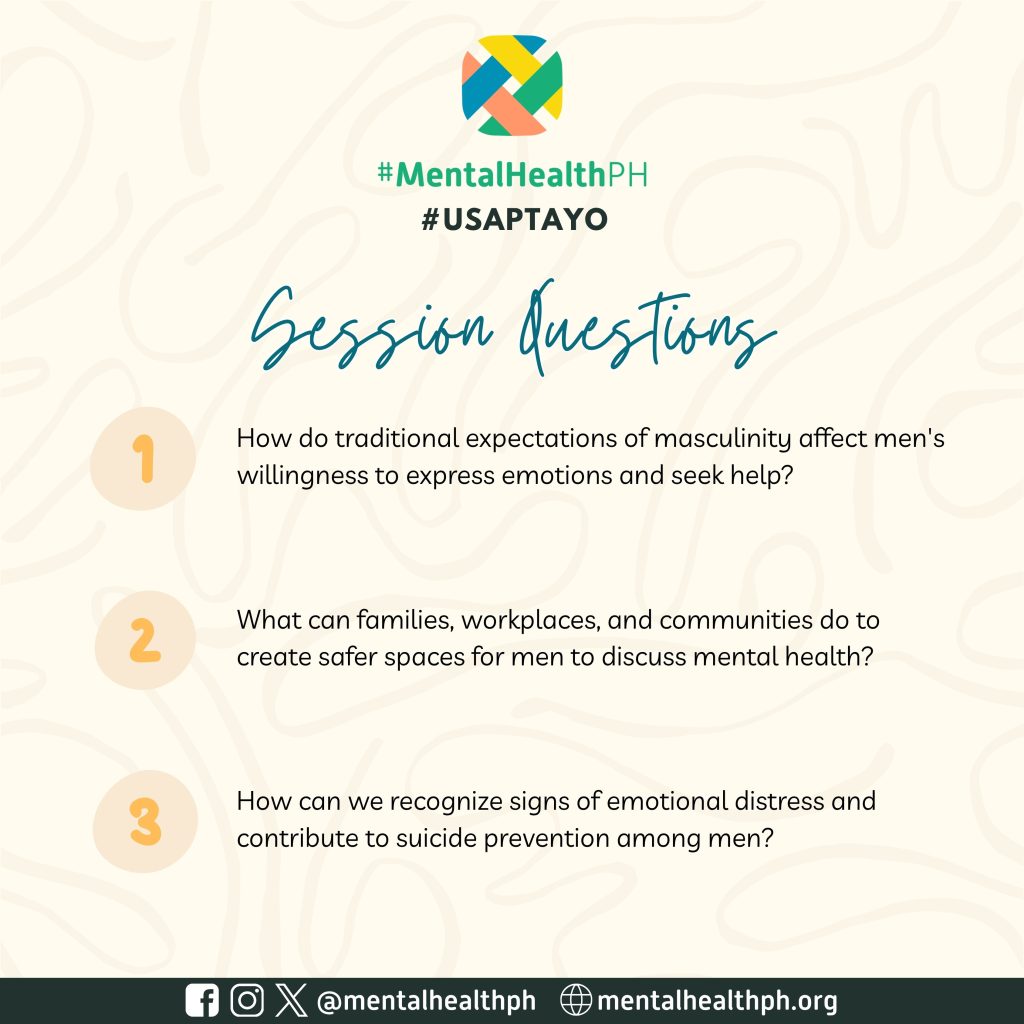
Session Questions:
- How do traditional expectations of masculinity affect men’s willingness to express emotions and seek help?
- What can families, workplaces, and communities do to create safer spaces for men to discuss mental health?
- How can we recognize signs of emotional distress and contribute to suicide prevention among men?