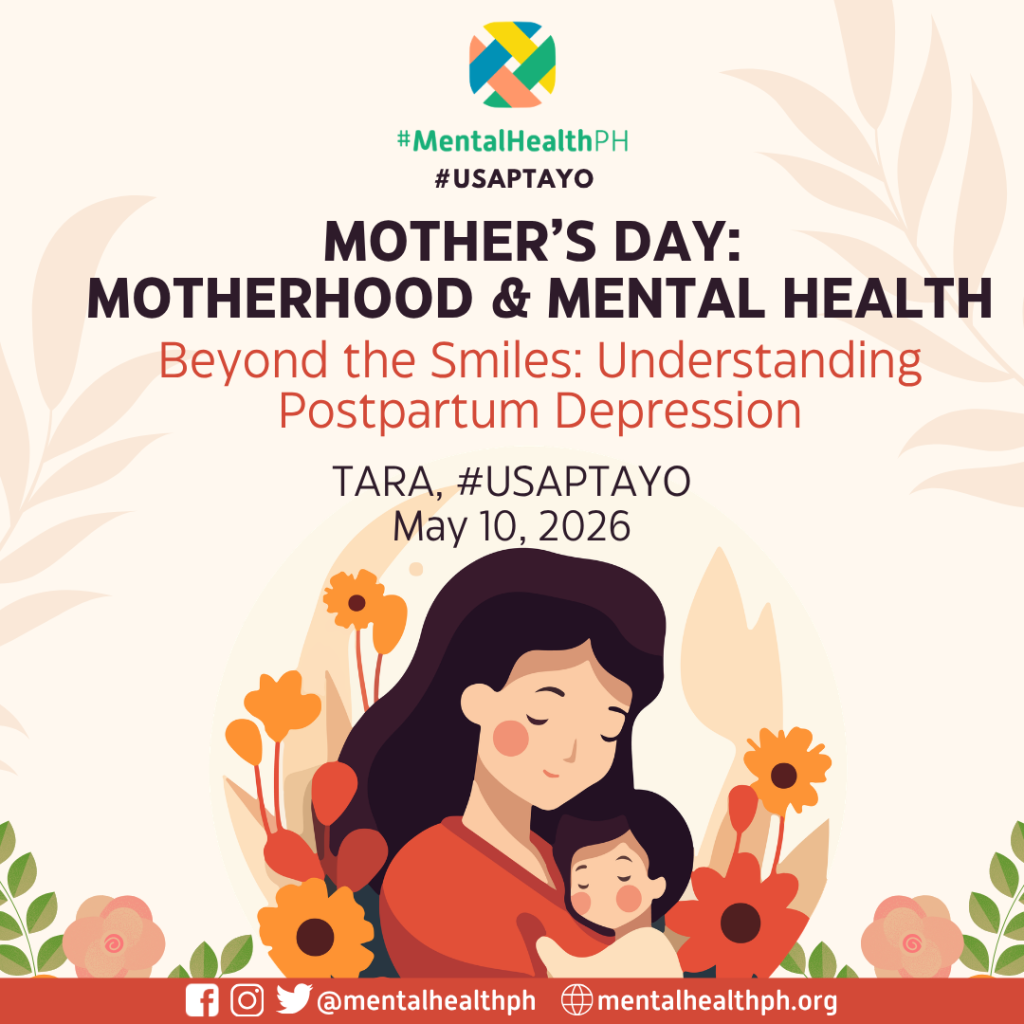
May 10, 2026
Writer: Glory Tangarorang
Graphics: Richardson Mojica
Moderator: Richardson Mojica
Every Mother’s Day, we celebrate mothers for their love, sacrifice, and strength. Social media fills with flowers, family photos, and heartfelt tributes honoring the women who raised and cared for us. Yet behind many smiles are mothers silently carrying exhaustion, anxiety, loneliness, and emotional pain that often go unseen.
Motherhood is beautiful, but it is also overwhelming, life-changing, and emotionally demanding. While many people expect mothers to feel joyful after childbirth, not every mother experiences happiness immediately, and that is more common than society realizes.
According to the World Health Organization, around 1 in 5 women experience mental health problems during pregnancy or after childbirth. One of the most common conditions is Postpartum Depression (PPD), a serious but treatable mental health condition that affects mothers weeks or even months after giving birth.
Unlike the temporary “baby blues,” postpartum depression may involve persistent sadness, hopelessness, excessive worry, fatigue, irritability, difficulty bonding with the baby, or feelings of worthlessness. Some mothers continue caring for everyone around them while quietly struggling inside. Many suffer in silence because they fear judgment or being seen as “weak” or “ungrateful.”
One of the hardest truths about postpartum depression is that it does not always look obvious. A mother may still smile in photos, attend gatherings, and care for her child while silently feeling emotionally drained. Society often romanticizes motherhood so much that mothers feel pressured to always appear strong, patient, and grateful.
Recent studies show that postpartum depression is influenced not only by hormonal changes, but also by sleep deprivation, lack of support, financial stress, previous mental health struggles, and the pressure to become a “perfect mother.” Research also suggests that some mothers develop symptoms later within the first year after childbirth, not just immediately after delivery.
In the Philippines and many other cultures, mothers are often taught to endure hardships quietly. They are praised for sacrifice but rarely encouraged to openly discuss their emotional struggles. Because of this, many mothers continue to suffer alone instead of seeking help.
Healing begins when mothers feel heard, supported, and understood. Professional care, emotional support, rest, counseling, and simple acts of compassion can make a significant difference. Sometimes, what a struggling mother needs most is someone who will listen without judgment and remind her that she does not have to carry everything alone.
This May 10, Mother’s Day, perhaps the best gift we can offer mothers is not only appreciation for what they do, but compassion for what they go through. Mothers are not only caregivers—they are human beings who also need care, reassurance, and support.
Strong mothers are not mothers who never struggle. Strong mothers are those who continue loving and trying despite the battles no one else sees.
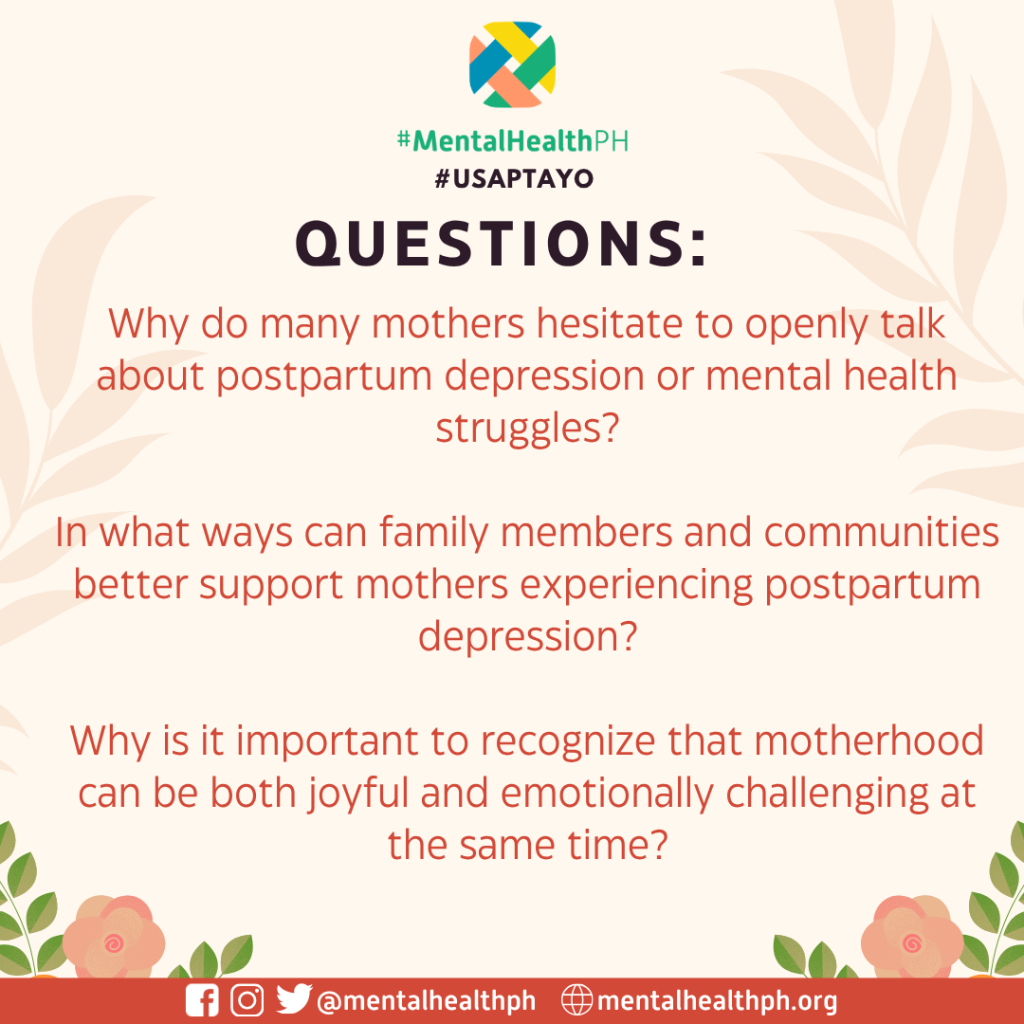
Session Questions
- Why do many mothers hesitate to openly talk about postpartum depression or mental health struggles?
- In what ways can family members and communities better support mothers experiencing postpartum depression?
- Why is it important to recognize that motherhood can be both joyful and emotionally challenging at the same time?
References and Literature
[1] Centers for Disease Control and Prevention. Timing of postpartum depressive symptoms. 2023 [cited 2026 May 8]. Available from: https://www.cdc.gov/pcd/issues/2023/23_0107.htm
[2] Khamidullina Z, et al. Postpartum depression epidemiology, risk factors, and management. J Clin Med. 2025;14(7):2418. Available from: https://doi.org/10.3390/jcm14072418
[3] Matumadi IU, Caorong LA, Bangcola AA. Postpartum depression, risk factors, support perception, and quality of life among primipara mothers in Rural Lanao del Sur, Philippines. J Healthc Adm. 2024;3(2):135-148.
[4] Wang Y, et al. Association of maternal postpartum depression, anxiety, and stress symptoms: A network analysis. BMC Psychiatry. 2024;24. Available from: https://doi.org/10.1186/s12888-024-06412-9
[5] National Institute of Mental Health. Perinatal depression. 2022 [cited 2026 May 9]. Available from: https://www.nimh.nih.gov/health/publications/perinatal-depression/index.shtml
[6] World Health Organization. Perinatal mental health. 2024 [cited 2026 May 9]. Available from: https://www.who.int/teams/mental-health-and-substance-use/promotion-prevention/perinatal-mental-health