20 Februrary 2026
Writer: Christopher Jan Dumaguin
Researcher: Christopher Jan Dumaguin
You Are Seen.
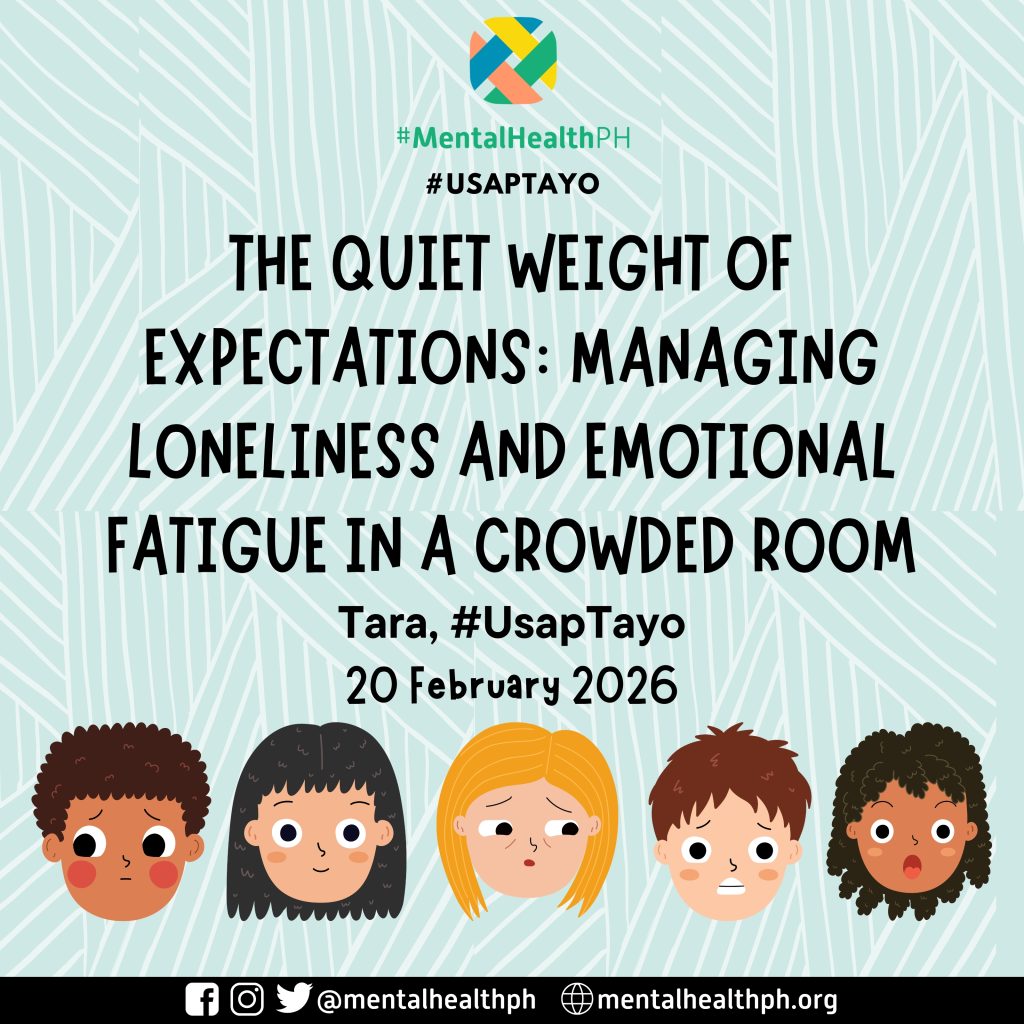
Have you ever stood in a room full of people and felt strangely invisible? Conversations flowing, laughter rising, yet something inside you feels distant. You are there, but not fully with anyone.
Loneliness is not about how many people surround you. It is about whether you feel understood and emotionally connected. Recent research continues to affirm that loneliness is strongly associated with mental distress even among socially active individuals. A 2024 study published in Frontiers in Psychology found that loneliness significantly predicts psychological distress and reduced well-being, emphasizing that the experience is subjective and rooted in perceived disconnection rather than physical isolation. [3]
Maybe you are the responsible one. The reliable one. The person others lean on. You respond quickly, stay composed, and deliver what is expected. But inside, you feel unseen. That quiet mismatch between who you present and what you feel can slowly turn into emotional strain.
Research among university populations shows that loneliness is strongly linked to stress and burnout symptoms. A 2023 study in the International Journal of Environmental Research and Public Health found that people experiencing higher loneliness also reported higher levels of emotional exhaustion and stress, reinforcing how social disconnection and fatigue often reinforce one another. [1]
If this resonates with you, you are not weak. You are learning to see yourself and responding to emotional overload that needs to be realized and unburdened.
The Invisible Burn.
Emotional fatigue is not always dramatic. It is the kind of tiredness that lingers even after rest. It is feeling drained after social events. It is convincing yourself that you are just fine because explaining feels like another task.
Recent workplace research has begun to identify “work loneliness” as a distinct psychological experience. A 2024 study in the Journal of Occupational Health Psychology demonstrated that workplace loneliness significantly predicts emotional exhaustion and decreased engagement, even when workload is controlled. The study suggests that relational strain, not just task demands, contributes to burnout. [2]
Think about how much effort it takes to constantly meet expectations, remain pleasant, and avoid disappointing anyone. Over time, you may start performing connection rather than experiencing it. But connection cannot anchor to performance. It always anchors to authenticity.
Permission to Be Human: Reclaiming Belonging Without Performance
Belonging is not about being impressive. It is about being accepted. We are not failing because we feel lonely in a crowded room. We are not fragile because we feel emotionally tired.
The solution is not necessarily more social activity. It may be a more honest connection. We can start small through one safe conversation and one truthful sentence, “I’ve been feeling more tired lately.” That small act may help reduce the gap between our inner and outer self. And if the weight feels heavy and persistent, seeking professional help is not an admission of failure. It is a proactive step supported by evidence.
The quiet weight of expectations does not have to stay on our shoulders forever. It may feel stitched into our routines, into our roles, into the way we have learned to survive and succeed. But it is not permanent. It can be lifted, not in one dramatic moment, but in small, deliberate acts of honesty. In choosing rest when we are tired instead of pushing through. In admitting we are overwhelmed instead of pretending we are unshakeable. In allowing someone to see us without the polish.
We do not have to carry everything alone. Support is not a luxury reserved for when things fall apart. It is something we are allowed to reach for simply because we are human. Whether that support comes from a trusted friend, a quiet conversation, a counselor, or even our own gentler self-talk, it makes the load lighter.
We deserve relationships where we do not have to audition for belonging. We deserve connections where our value is not measured by productivity, composure, or constant availability. Real connection does not ask us to perform. It allows us to be present, imperfect, and honest. We are allowed to set the expectations down. We are allowed to breathe. We are worthy of being known as we truly are, not just as we appear.
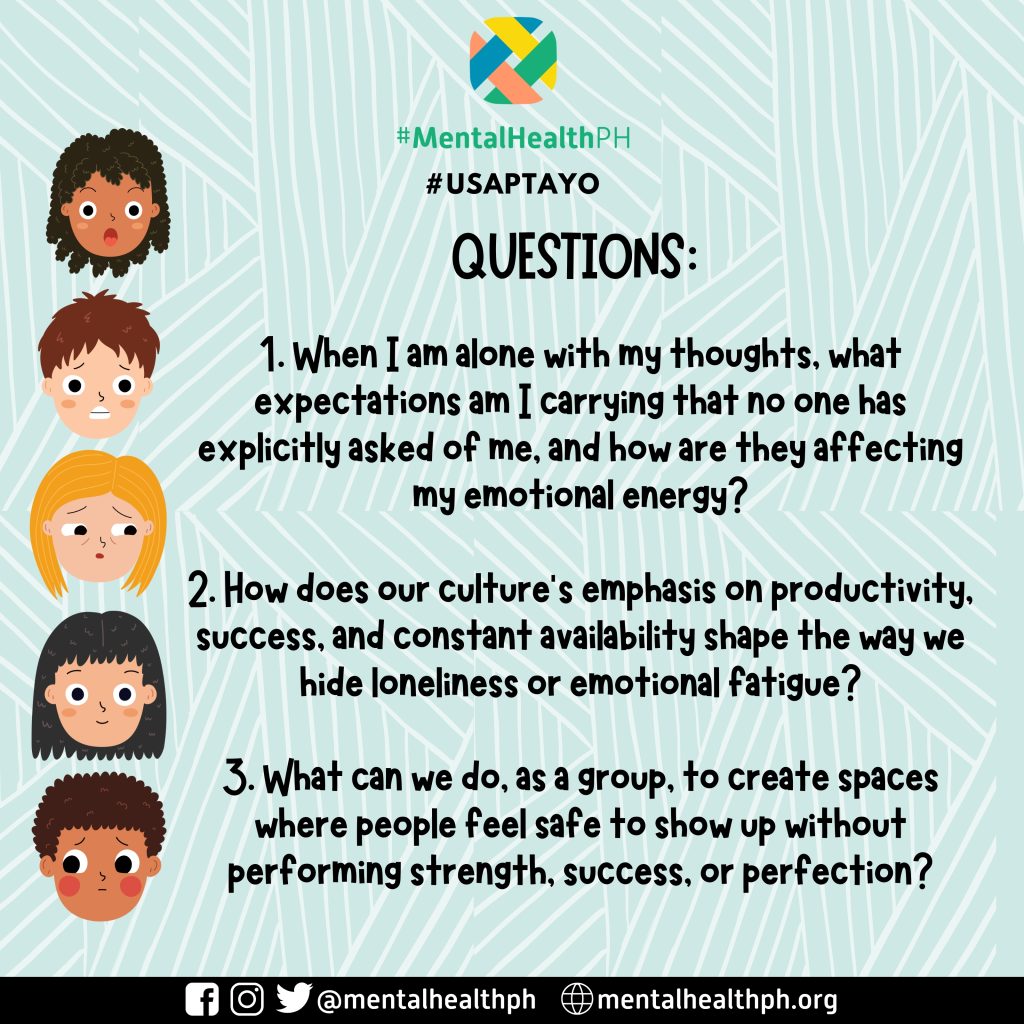
Session Questions:
- When I am alone with my thoughts, what expectations am I carrying that no one has explicitly asked of me, and how are they affecting my emotional energy?
- How does our culture’s emphasis on productivity, success, and constant availability shape the way we hide loneliness or emotional fatigue?
- What can we do, as a group, to create spaces where people feel safe to show up without performing strength, success, or perfection?
References:
- Li, X. et al. 2023. Loneliness, stress, and emotional exhaustion among university students. International Journal of Environmental Research and Public Health, 20(15), 6453.Retrieved at: https://www.mdpi.com/
- Ozcelik, H. et al. 2024. Workplace loneliness and emotional exhaustion: The relational cost of isolation. Journal of Occupational Health Psychology, 29(1), 45–60. Retrieved at: https://www.sciencedirect.com/
- Zhang, L. et al. 2024. Loneliness and psychological distress: The mediating role of belongingness. Frontiers in Psychology, 15, 1289452. Retrieved at: https://www.frontiersin.org/