January 30, 2026
Writer: Abby Alvarado
Researcher: Abby Alvarado
January 1 has a certain magic. It feels like a blank page, full of possibility. A symbolic reset that promises growth, control, and reinvention. Yet by mid-February, that early surge of energy often fizzles into frustration. Our cultural urge to turn a simple calendar change into deep, lasting transformation says a lot about the delicate relationship between motivation, expectations, and mental health.
When “Fresh Start” Expires
Every January, we set goals with a lot of hope behind them. But research describes this early surge as “false hope syndrome” a pattern where we aim high and assume our motivation will stay strong. When real life steps in fatigue, stress, missed days… that hope starts to crack [1].
Psychologists also talk about the “fresh start effect.” Moments like New Year’s Day feel like a clean slate, as if they divide who we were from who we want to become. That reset can feel empowering, but it doesn’t guarantee long-term drive. Motivation isn’t something we can access endlessly just because the calendar changed [2].
Often, we confuse the excitement of starting with motivation that can actually last. That early emotional lift fuels optimism, but optimism without structure burns out fast. When the energy fades, many of us read it as failure when really, we just mistook a temporary high for sustainable effort.
When Burnout Hits
Look at how many resolutions start with sweeping declarations: “I’ll change my entire life.” “I’ll fix my body, my habits, my mindset by March.” These expectations sound inspiring, but they’re rarely rooted in the realities of daily life.
Many people pile on multiple goals without considering their current emotional or physical capacity. When goals are too large or poorly defined, the brain encounters resistance almost immediately and that resistance is often interpreted as failure. Research shows that resolutions commonly lose momentum within just a few weeks, largely because they’re built on unrealistic expectations and vague plans. Without clear, achievable steps, motivation drains fast [3].
This cycle reflects a familiar mental health pitfall: when we set standards that our everyday lives can’t realistically support, the result isn’t growth, it’s stress, self-blame, and eventual burnout.
Motivation Isn’t Static
Motivation doesn’t stay at that “peak January” level for long. Research shows that even when commitment starts strong, it naturally declines especially when the excitement of beginning isn’t supported by enough energy, rest, or emotional capacity [3].
Self-determination theory, a well-established framework in psychology, explains that motivation lasts only when three basic needs are met: autonomy (feeling that the goal is truly our choice), competence (believing we can actually do it), and relatedness (feeling supported by others) [4].
When goals are fueled more by pressure “I should be doing more,” “I need to fix myself” than by what genuinely matters to us, motivation fades fast. Autonomy weakens, confidence drops, and without support, the goal starts to feel heavy rather than meaningful. Over time, it’s not just motivation that suffers, but our mental health because the drive we’re using isn’t aligned with our wellbeing.
Motivation Is Finite
There’s a common myth that motivation is a fixed trait: something you either have or don’t. But research suggests motivation works more like a limited resource, one that can wear down quickly when we rely on it alone instead of building habits and systems that carry us through [1].
Motivation is a bit like adrenaline. It’s useful for getting started, but it isn’t designed to sustain us day after day. When we expect that initial rush to power long-term change, burnout is almost inevitable.
This helps explain why so many January goals stall within weeks. Our minds and bodies can’t maintain high-intensity effort without support, things like rest, flexible routines, meaningful structure, community, and reasons for change that go beyond external metrics.
Studies also show that goals rooted in intrinsic values such as personal fulfillment or growth are more likely to support wellbeing and long-term follow-through than goals driven by comparison, pressure, or perfectionism [5].
When change is connected to how something feels joy, purpose, alignment, the brain stays engaged because the process itself becomes rewarding. In this way, motivation isn’t about pushing harder; it’s about whether the goal resonates with who we are and what matters to us.
Here’s the more compassionate reframing: when motivation fades, it isn’t a personal failure but information. It tells us that goals built purely on ambition, without emotional support or self-kindness, are harder to sustain.
Instead of treating low motivation as a flaw, we can read it as a cue to shift toward practices that actually last: realistic expectations, rest, adaptability, self-compassion, and routines that flex with real life. These are what build resilience and protect mental health.
This perspective shows up in wellness movements like “Soft January,” which favor gentle adjustments over dramatic overhauls and place emotional wellbeing above productivity pressure [6].
January will always carry a sense of hope and that’s not a bad thing. But lasting change isn’t powered by hope alone. It grows from understanding how motivation works, how expectations shape our mental health, and how sustainable growth depends on self-awareness, flexibility, and support.
So maybe it’s time to move past the idea that willpower should carry us through the year. Instead, we can build systems that respect our energy, honor our wellbeing, and make room for the imperfect, human reality we actually live in not just the ideal version we imagined at the start of January. If you or someone you know needs mental health consultation, kindly refer to our directory for mental health facilities, services, and organizations around the Philippines: https://mentalhealthph.org/directory/

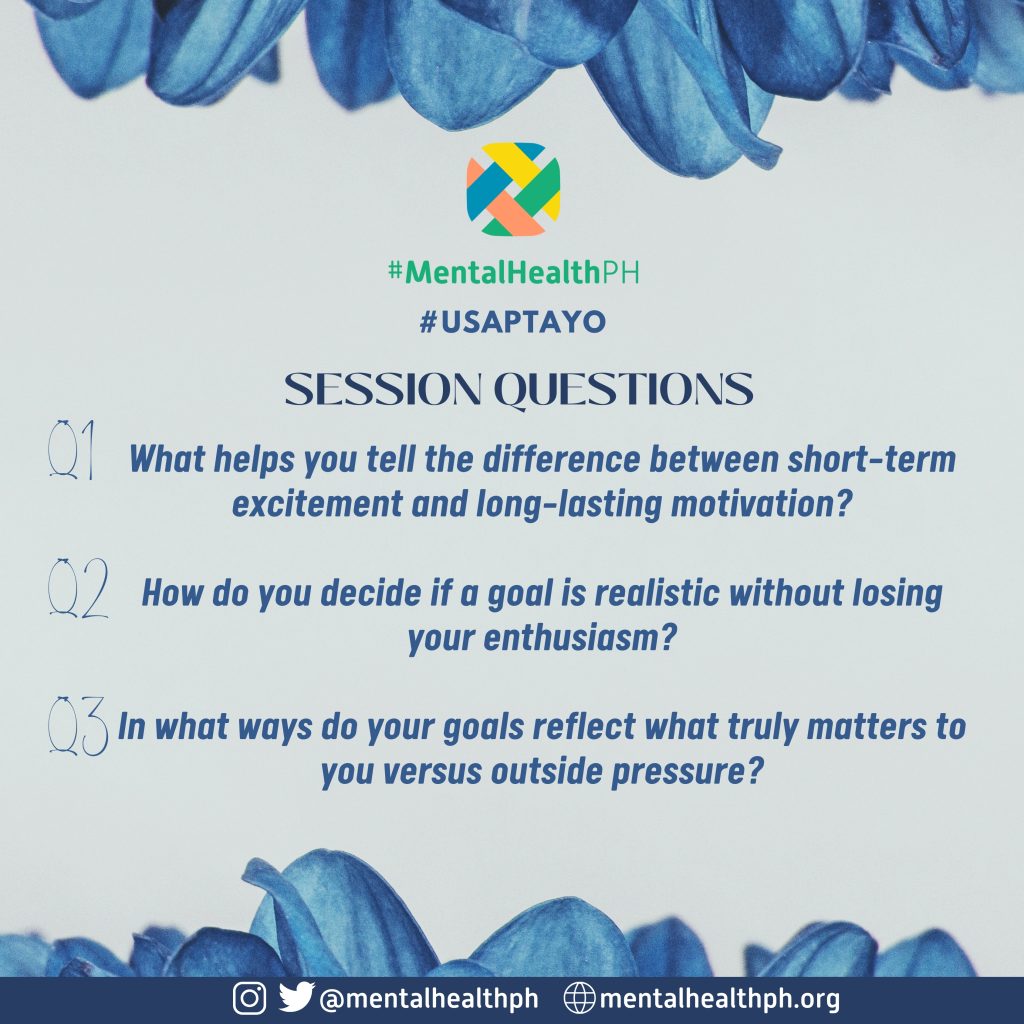
Guide Questions:
- What helps you tell the difference between short-term excitement and long-lasting motivation?
- How do you decide if a goal is realistic without losing your enthusiasm?
- In what ways do your goals reflect what truly matters to you versus outside pressure?
References:
[1] https://themindshift.ca/blog/motivation-drop-after-new-year
[2] https://phys.org/news/2026-01-fresh-powerful-goals.html
[4] https://pubmed.ncbi.nlm.nih.gov/36673668/
[5] https://newsarenaindia.com/lifestyle/why-new-year-motivation-fades-with-time/67019
[6] https://www.marieclaire.co.uk/life/health-fitness/soft-january-trend