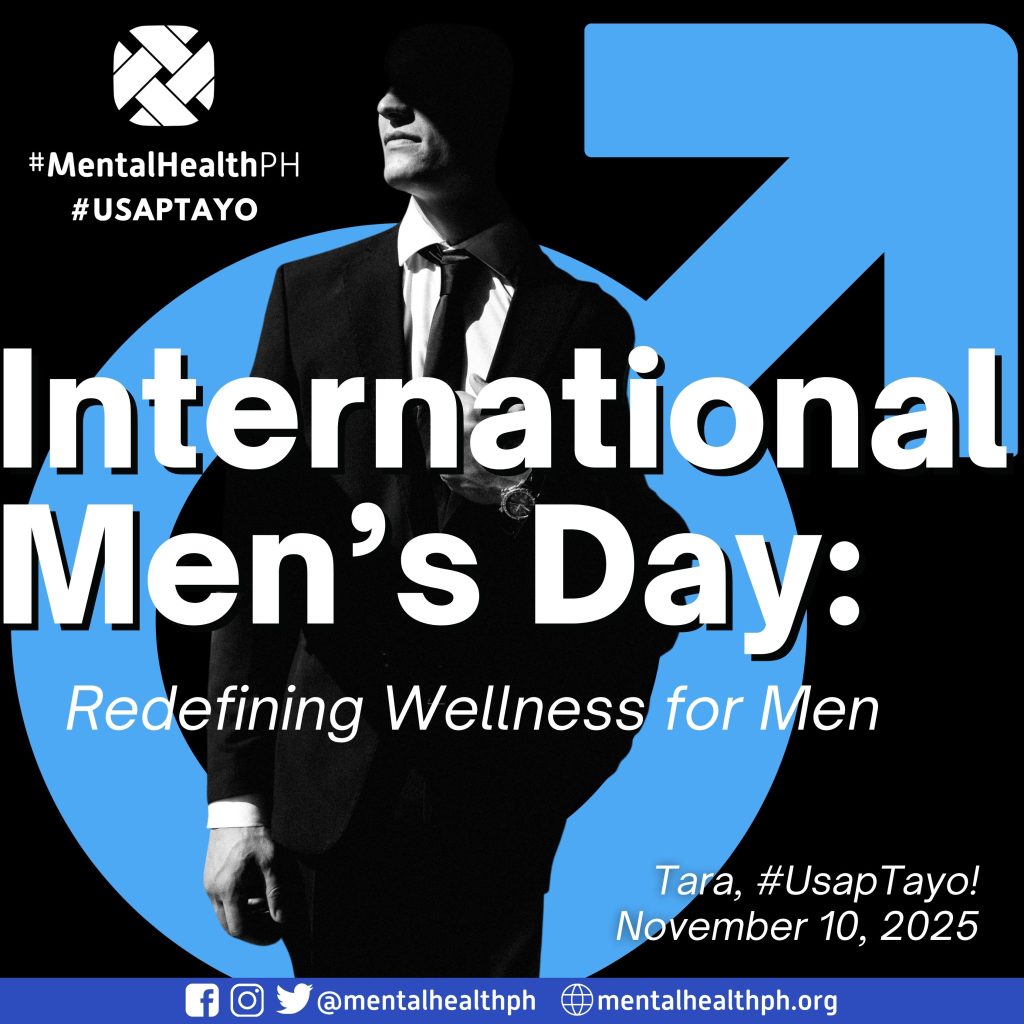
Each year on November 19, the world celebrates International Men’s Day — a reminder that men’s health and wellness deserve equal visibility and action. Yet for many, wellness remains narrowly associated with physical strength and resilience, rather than holistic well-being that includes emotional, psychological, and social dimensions.
Why Men’s Wellness Matters
Globally, men experience poorer health outcomes than women, losing about 40 percent more years of life due to preventable causes (U.S. Food and Drug Administration [FDA], 2024). Mental health is a major concern: nearly one in three men will experience depression in their lifetime, but only about one-fourth seek professional help (Indiana University School of Medicine, 2024).
In the Philippines, suicide rates remain higher among men, and cultural norms often discourage emotional expression or therapy (Philippine Information Agency [PIA], 2024). A Quezon City survey found that only 27 percent of Filipino men said they would seek professional help for depression (Inquirer.net, 2024). These numbers show that while awareness is rising, stigma still keeps many men from reaching out.
Common Gaps in Men’s Wellness
1. Avoidance of preventive care.
Many men skip medical consultations until symptoms become serious. A U.S. survey revealed that over 40 percent of men visit doctors only when they have major health issues (Summit Medical Group, 2023). This pattern mirrors Filipino men’s reluctance to undergo check-ups or mental-health screening.
2. Mental-health stigma.
Globally, men die by suicide at significantly higher rates than women, and fewer than half of men with depression or anxiety receive treatment (Anxiety and Depression Association of America [ADAA], 2023). In the Philippines, the “tough guy” mindset still defines masculinity, discouraging men from talking about vulnerability (M Psych Services, 2021).
3. Lifestyle and behavioral risks.
Men have higher rates of alcohol consumption, smoking, and unhealthy coping mechanisms (Global Action on Men’s Health [GAMH], 2024). In the UK, men accounted for 76 percent of premature heart-disease deaths and were 26 percent more likely than women to develop type 2 diabetes (Health at Work Centre, 2024).
Broadening the Meaning of Wellness
Men’s wellness extends far beyond the gym or the clinic. It includes:
-
Physical health: Regular screenings for heart disease, diabetes, and prostate or testicular cancer (American Journal of Managed Care [AJMC], 2025).
-
Mental and emotional health: Recognizing that anxiety, burnout, and depression affect men and require open dialogue and access to counseling.
-
Social well-being: Building supportive friendships, healthy family relationships, and community ties.
-
Positive masculinity: Redefining strength as the courage to seek help, express emotion, and practice self-care.
Moving from Awareness to Action
a) Promote early and preventive care.
Health campaigns stress the need for regular medical visits and screenings. The International Center for Research (ICR Inc., 2024) notes that early detection of chronic conditions could prevent most premature male deaths. Men’s Health Month campaigns likewise encourage balanced nutrition, exercise, and stress management (Men’s Health Network, 2025).
b) Address mental-health stigma.
Destigmatizing conversations are key. Breaking the “macho” silence allows men to share experiences and emotions without fear of judgment. Local advocates have popularized the message that even simple check-ins — “Pagod ka ba? Kamusta ka?” — can open doors to help and hope (Simpol.ph, 2024).
c) Tailor interventions to men’s contexts.
Workplaces, sports clubs, and digital platforms can host wellness programs designed around men’s needs. Integrating physical and mental-health outreach ensures men receive holistic care, while male role models can help shift attitudes about seeking help.
Taking Collective Responsibility
Men’s wellness is a shared responsibility:
-
Families and communities can normalize emotional conversations and check-ups.
-
Schools and workplaces can provide men-friendly wellness programs, including counseling and preventive screenings.
-
Health policymakers can ensure that men’s health is prioritized in national strategies and budgets, emphasizing equity in access to care.
International Men’s Day is not just a celebration — it’s a call to action. When we expand the meaning of wellness to include both physical and mental health, we create space for men to live longer, healthier, and more fulfilled lives.
Real strength lies not in silence, but in self-awareness and connection. As societies champion gender equality, we must also ensure that men feel empowered to care for their own well-being. Because when men are well — physically, emotionally, and socially — families and communities thrive with them.

Questions:
1. What keeps men from seeking help for mental health, and how can we break these barriers?
2. How can workplaces and schools promote men’s wellness without reinforcing stereotypes?
3. How can redefining masculinity as openness and self-care improve men’s health?
References:
Anxiety and Depression Association of America. (2023). Men’s mental health. https://adaa.org/find-help/by-demographics/mens-mental-health
Food and Drug Administration. (2024, June 10). Concerning trends in men’s health. https://www.fda.gov/news-events/fda-voices/concerning-trend-mens-health
Global Action on Men’s Health. (2024). The facts: The problems. https://gamh.org/the-facts/the-problems/
Health at Work Centre. (2024). Men’s Health Week: Know the facts. https://healthatworkcentre.org.uk/mens-health-week-know-the-facts/
Indiana University School of Medicine. (2024, June 12). Men’s health month: Spirit of medicine blog.https://medicine.iu.edu/blogs/spirit-of-medicine/mens-health-month
M Psych Services. (2021, November 30). Men’s mental health: Only tough men rule.https://mpsychservices.com/2021/11/30/mens-mental-health-only-tough-men-rule/
Philippine Information Agency. (2024, May 3). Breaking the silence on men’s mental health. https://pia.gov.ph/breaking-the-silence-on-mens-mental-health/
Inquirer.net. (2024, May 10). Quezon City govt urges men to seek mental health services.https://newsinfo.inquirer.net/2074810/quezon-city-govt-urges-men-to-seek-mental-health-services
Summit Medical Group. (2023, March 15). Four important facts about men’s health.https://www.summitmedical.com/blog/four-important-facts-about-mens-health
Simpol.ph. (2024, June 20). Men’s mental health: Silence and support. https://www.simpol.ph/mens-mental-health-philippines-bourdain-silence/
American Journal of Managed Care. (2025, June). Men’s health month 2025: Spotlight on lifelong health.https://www.ajmc.com/view/men-s-health-month-2025-spotlight-on-prostate-cancer-lifelong-health
ICR Inc. (2024, June 14). Destigmatizing men’s health for Men’s Health Week. https://icrinc.com/news-resources/destigmatizing-mens-health-for-mens-health-week-june-9-15/
Men’s Health Network. (2025). Men’s Health Month toolkit 2025. https://menshealthmonth.org/wp-content/uploads/2025/05/Mens-Health-Month-Toolkit-2025-3.pdf