October 30, 2026
Writer: Christopher Jan Dumaguin
Researcher: Christopher Jan Dumaguin
Graphics: Krystle Mae Labio
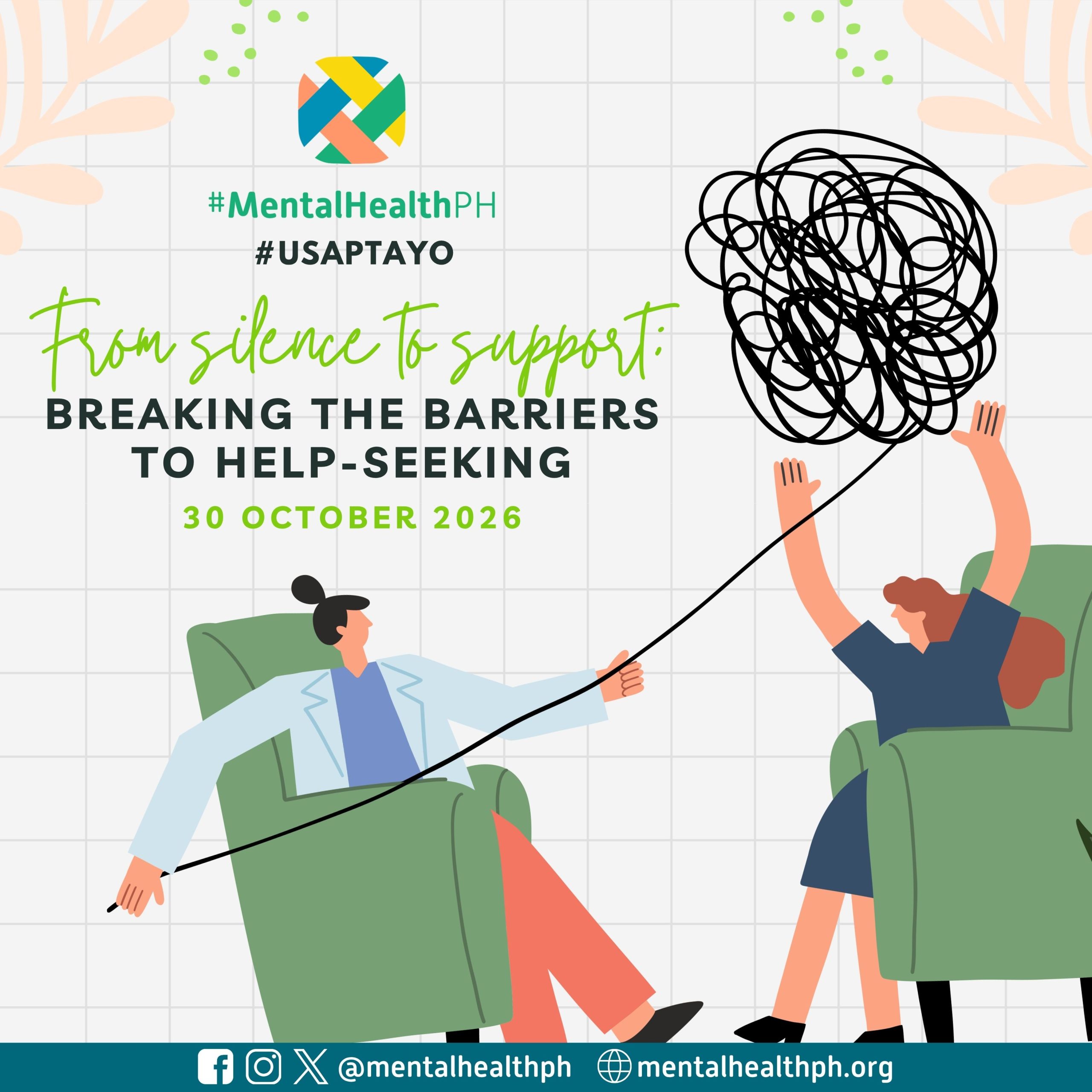
Sometimes, the heaviest battles are the ones no one sees. Behind a smile is exhaustion. Behind silence is fear. Behind the words “I’m okay” is a person struggling to find the courage to ask for help.
Breaking the barriers to help-seeking requires us to look beyond the individual. We must understand the internal struggles that keep people silent, the social environments that influence their decisions, and the systems that determine whether support is available and accessible.
This Mental Health Awareness Month is not just about raising awareness of mental health challenges around the world but it is also about learning to break the barriers to help-seeking.
The Self: Overcoming the Fear Within
The first barrier to help-seeking often begins within us. We experience emotional distress and may recognize the need for support yet convince ourselves that our struggles are not serious enough to deserve attention. We might think, “I should be stronger,” “Other people have bigger problems,” or “I can handle this on my own.”
Such thoughts may arise from our personal beliefs about strength, independence, and emotional control. While resilience is valuable, it can become a barrier when we believe that being resilient means enduring every difficulty without assistance.
Self-stigma can also prevent us from reaching out. When we internalize negative beliefs about mental health conditions, we may associate asking for help with weakness, failure, or personal inadequacy. As a result, we conceal our struggles, delay seeking assistance, or blame ourselves for what we are experiencing.
A systematic review examining perceived barriers and facilitators to mental health help-seeking among young people identified stigma, difficulty recognizing mental health concerns, and a preference for self-reliance as key barriers to seeking professional assistance. This also illustrates how personal beliefs and fears can prevent individuals from taking the first step toward support. [1]
Overcoming this barrier begins with recognizing that emotional distress is not a personal failure. Asking for help does not diminish a person’s strength. It demonstrates an awareness of one’s needs and a willingness to take steps toward well-being.
We can begin by acknowledging our emotions without judgment, learning to recognize when distress interferes with daily functioning, and identifying someone we trust. When difficulties persist or become overwhelming, seeking guidance from a qualified mental health professional can be an important step. This is why we, as individuals sharing basic human emotions, should allow ourselves to normalize, believe, and recognize that we deserve help.
The Society: Challenging the Culture of Silence
Although help-seeking may begin with our decision, that decision is often influenced by the people around us. Families, friends, workplaces, schools, and communities can either encourage open conversations about mental health or reinforce the silence surrounding emotional struggles.
In some environments, we are told to be strong, avoid discussing our personal problems, or sometimes, keep our difficulties within our family. Expressions such as “Just be positive,” “Others have it worse,” or “You are overthinking” may intend to comfort, but they can unintentionally dismiss a person’s experience.
Fear of gossip, discrimination, and damage to one’s reputation can further discourage disclosure. We usually worry that others will question our competence, treat us differently, or view our struggles as a source of shame for our family.
Research found that social stigma, concerns about shame and loss of face, and expectations surrounding conformity were among the barriers affecting formal mental health help-seeking among Filipinos. The review also identified supportive family members and friends as important facilitators of seeking help. This suggests that social relationships can operate in two directions. They can reinforce silence or create the conditions for people to speak openly and seek assistance. [2]
Creating a supportive society requires more than telling people that mental health matters. It requires changing how we respond when someone chooses to share their struggles. We can begin by listening without judgment, respecting confidentiality, avoiding harmful labels, and encouraging professional assistance when needed.
Families can create safe spaces for honest conversations. Schools and workplaces can promote mental health literacy, provide clear referral pathways, and ensure that individuals are not ridiculed or penalized for seeking appropriate support.
Importantly, friends and family members do not need to have all the answers. Sometimes, the most meaningful response is simply to listen and say, “Thank you for trusting me. How can I support you?” Because when society replaces judgment with understanding, asking for help becomes less frightening and more acceptable.
The System: Making Support Accessible, Safe, and Responsive
Even when we overcome our fears and society becomes more accepting, another barrier may remain. The system itself.
We may be willing to seek professional help but unable to afford consultations, find an available mental health professional, travel to a service provider, or determine where to obtain proper and right assistance. At times, we are concerned about confidentiality, the quality of services, or how our concerns will be handled.
These obstacles demonstrate that help-seeking is not solely a matter of personal courage or social acceptance. We must also have realistic opportunities to access the help we really need.
Research identified stigma, limited mental health literacy, inadequate distribution of resources, service quality, and affordability as important factors influencing access to care in the scoping review of barriers and enablers to mental health care across Southeast Asia. The review highlights the need for coordinated strategies that address multiple barriers rather than relying on awareness campaigns alone. [3]
In the Philippines, study had similarly identified financial constraints and limited accessibility of mental health services as barriers to formal help-seeking. These findings underscore the importance of making mental health services both available and affordable. [2]
A responsive system should therefore provide clear information about available services, accessible referral pathways, appropriate confidentiality safeguards, and affordable professional assistance. Mental health support should also be integrated into settings where people already live, study, work, and interact, including schools, workplaces, primary health care facilities, and community organizations.
The World Health Organization advocates for person-centred, rights-based community mental health services that respect people’s dignity, choices, and individual needs. Such an approach recognizes that meaningful support extends beyond clinical treatment to include social inclusion, recovery, and participation in everyday life. [4]
Organizations and institutions also have a role to play. Establishing employee assistance initiatives, training personnel to respond appropriately to mental health concerns, communicating referral procedures, and protecting the privacy of those seeking help can make support more approachable.
Ultimately, a system should not merely wait for us to ask for help. It should actively create conditions that make asking easier, safer, and more worthwhile.
The journey from silence to support does not always begin with a dramatic confession. Sometimes, it begins with a simple sentence: “I have not been feeling okay, and I think I need help.” Our responsibility is to make sure that when someone finally finds the courage to say those words, they are met with understanding, not judgment; with guidance, not dismissal; and with genuine support, not another closed door.
Because mental health support should never be a privilege reserved for those who are brave enough, wealthy enough, or fortunate enough to find it. Everyone deserves to be heard, understood, and supported.
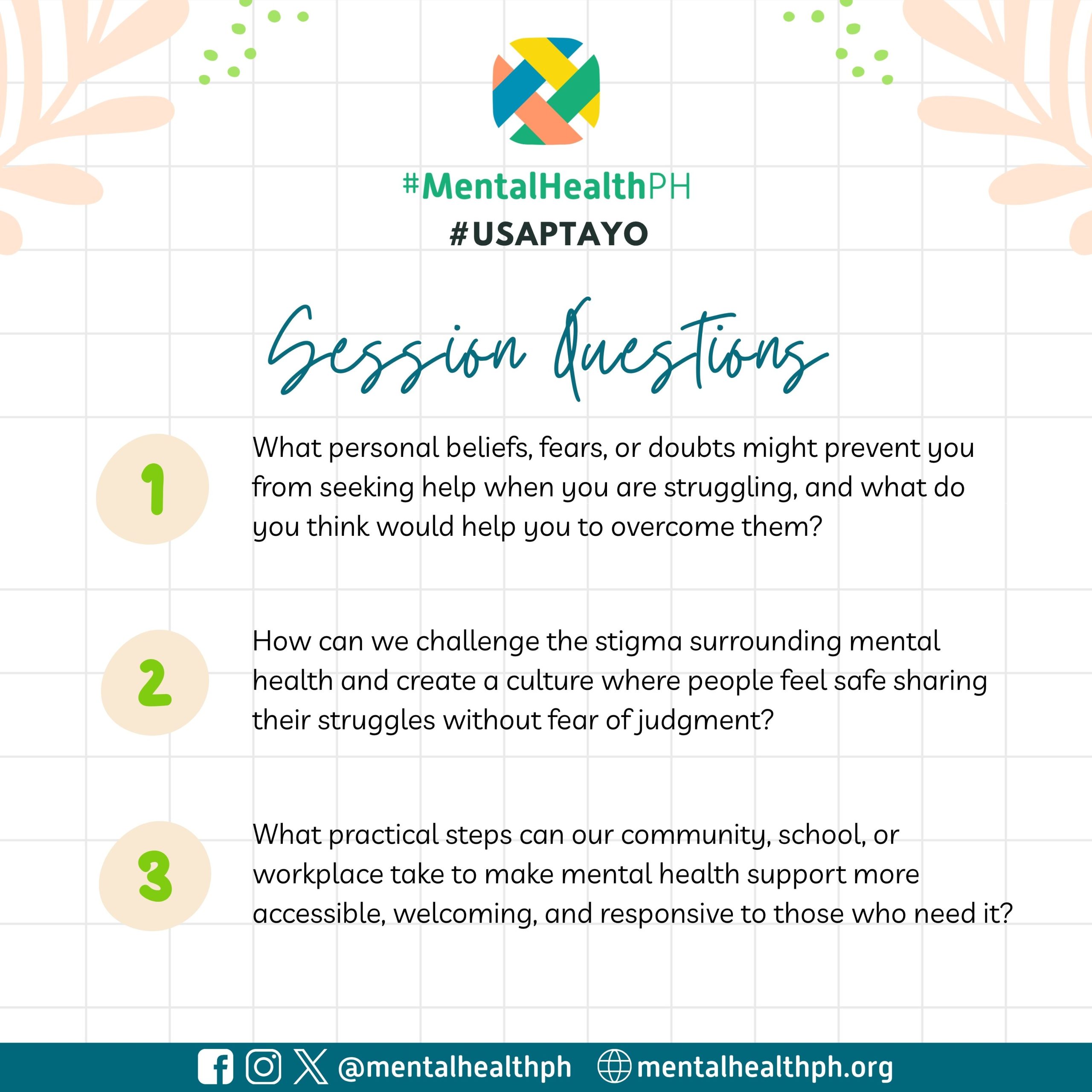
Session Questions:
- What personal beliefs, fears, or doubts might prevent you from seeking help when you are struggling, and what do you think would help you to overcome them?
- How can we challenge the stigma surrounding mental health and create a culture where people feel safe sharing their struggles without fear of judgment?
- What practical steps can our community, school, or workplace take to make mental health support more accessible, welcoming, and responsive to those who need it?
References:
- Andary, L., Sturt, P., & colleagues. 2023. Barriers and enablers to access and utilization of mental health care services across Southeast Asia: A preliminary scoping review. Asia-Pacific Psychiatry, 15(4), e12549. Retrieved at https://doi.org/10.1111/appy.12549
- Gulliver, A., Griffiths, K. M., & Christensen, H. 2010. Perceived barriers and facilitators to mental health help-seeking in young people: A systematic review. BMC Psychiatry, 10, Article 113. Retrieved at https://doi.org/10.1186/1471-244X-10-113
- Martinez, A. B., Co, M., Lau, J., & Brown, J. S. L. (2020). Filipino help-seeking for mental health problems and associated barriers and facilitators: A systematic review. Social Psychiatry and Psychiatric Epidemiology, 55(11), 1397–1413. Retrieved at https://doi.org/10.1007/s00127-020-01937-2
- World Health Organization. (2021). Guidance on community mental health services: Promoting person-centred and rights-based approaches. Retrieved at https://www.who.int/publications/i/item/9789240025707