10 April 2026
Writer: K Ballesteros
Graphics: Jia Moral
Moderator: Richardson Mojica
Part of the Department of Health (DOH)’s budget for 2026 was the allocation of P742.6 million for the implementation of mental health programming in line with the requirements of the Philippine Mental Health Act or Republic Act 11036. Section 21 of the law includes Suicide Prevention, calling for mental health services to develop and implement mechanisms for suicide prevention, intervention, and response.
Despite strong legal bases and resources at the national level, the National Capital Region Police Office (NCRPO) reported an exponential increase in deaths by suicide in 2026, from January 1 to March 23, compared to the same period in 2025. The NCRPO reported 111 confirmed cases of deaths caused by suicide in Metro Manila in 2026, whereas only 33 cases were reported the previous year [1,2,3]. Although legislators have sought to strengthen mental health programming in response to these findings, the more immediate impact of increased incidences of suicide impact communities immediately. According to the Mayo Clinic, individuals and their communities may experience powerful and difficult emotions in the wake of a suicide, including shock, anger, guilt, despair, and confusion [4].
Coping with deaths by suicide that occur in communities may be challenging for individuals, and their support systems. The Mayo Clinic recommends the following to help individuals cope as they grapple with a difficult situation:
- Expect and prepare to experience difficult and intense emotions.
- Keep in touch with loved ones, and rely on support systems. These may include family members, friends, or trusted companions.
- Grieve. Be open about the need to grieve, and be aware that the process may not be linear. Do not rush the process.
- Be prepared for painful reminders. These may include anniversaries, birthdays, or other memorable milestones. Prepare to experience setbacks during these instances, and seek increased support if needed.
- Consider a support group if these are available.
Suicide is a difficult and complex issue, and the factors and circumstances that contribute to increased risks occur at the individual, community, and societal levels. According to the United States Centers for Disease Control and Prevention (CDC), some risk factors include lack of access to healthcare, discrimination and stigma associated with help-seeking and mental health conditions, and unsafe media portrayals of suicide [5]. Due to the complexity of suicide, however, the protective factors that make up preventive and responsive actions are similarly varied and diverse.
When it comes to preventing suicide and building communities that can reduce risk factors, there is something everyone can do, right now:
- Create communities whose members reach out to each other for genuine connection. Having a reason to live, a strong sense of cultural identity, feeling supported and connected by others are all factors that help protect individuals and their communities. Actively become involved in community programs and events where genuine connections and support are fostered and maintained.
- Be active. Encourage representatives and political leaders to ensure that there is enough political will and financial resources to support at-risk individuals. Advocate for a more holistic view of suicide and the complex factors that contribute to its risks.
- Help prevent future risk by educating yourself and others around you. Be sensitive to the way suicide is portrayed in media, including social media platforms. Be aware of how discrimination and stigma around suicide and help-seeking may contribute to the risks of suicide. ReportingOnSuicide.org provides useful recommendations on how to report deaths by suicide, including reporting with enough context and facts to counter harmful and incorrect views about suicide, and ensuring that sensitive and possibly harmful information are avoided [7].
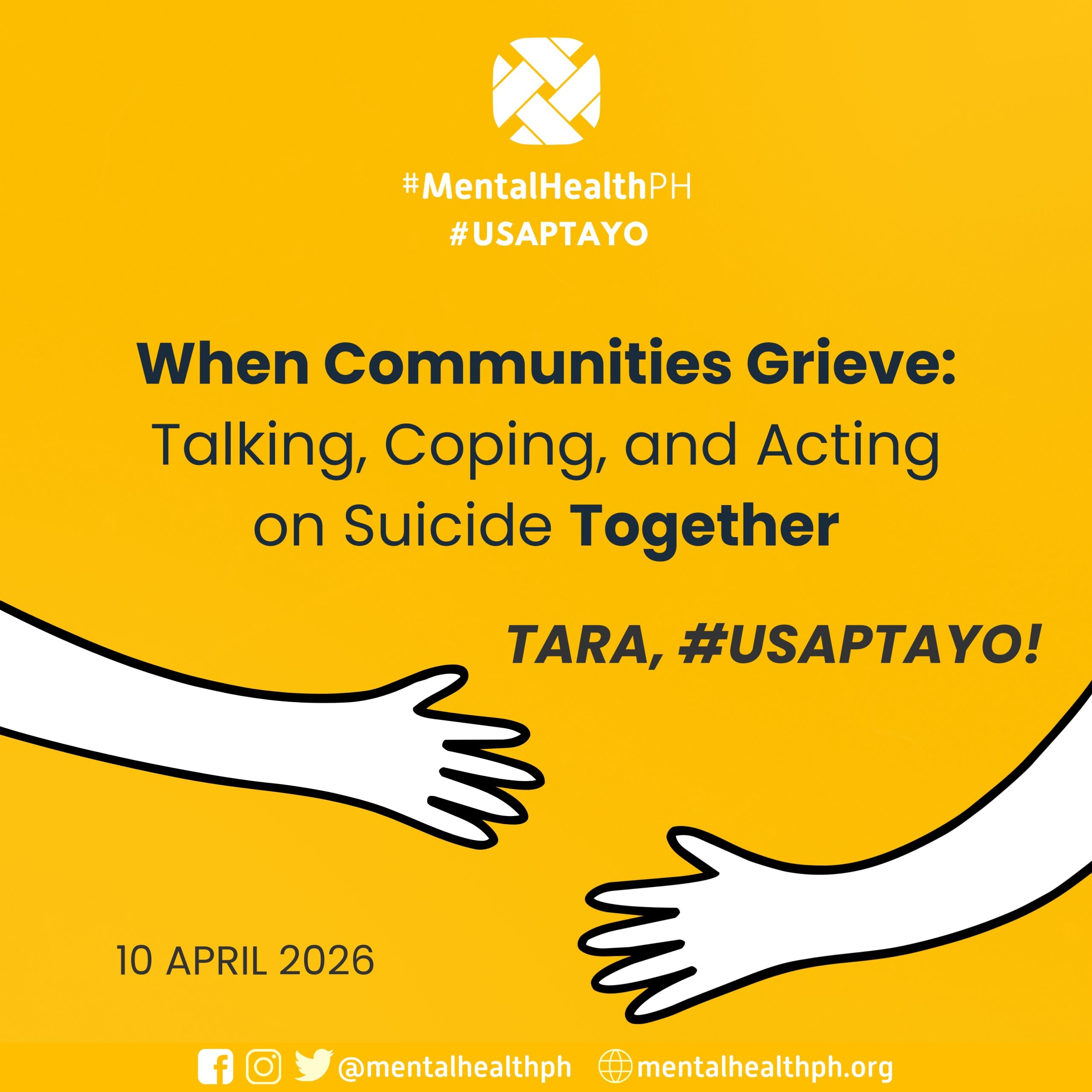
Join #MentalHealthPH on April 10 as we continue conversations about mental health and psychosocial disabilities, to prevent the rise of stigma and discrimination, and to contribute to suicide prevention. Tara, #UsapTayo!
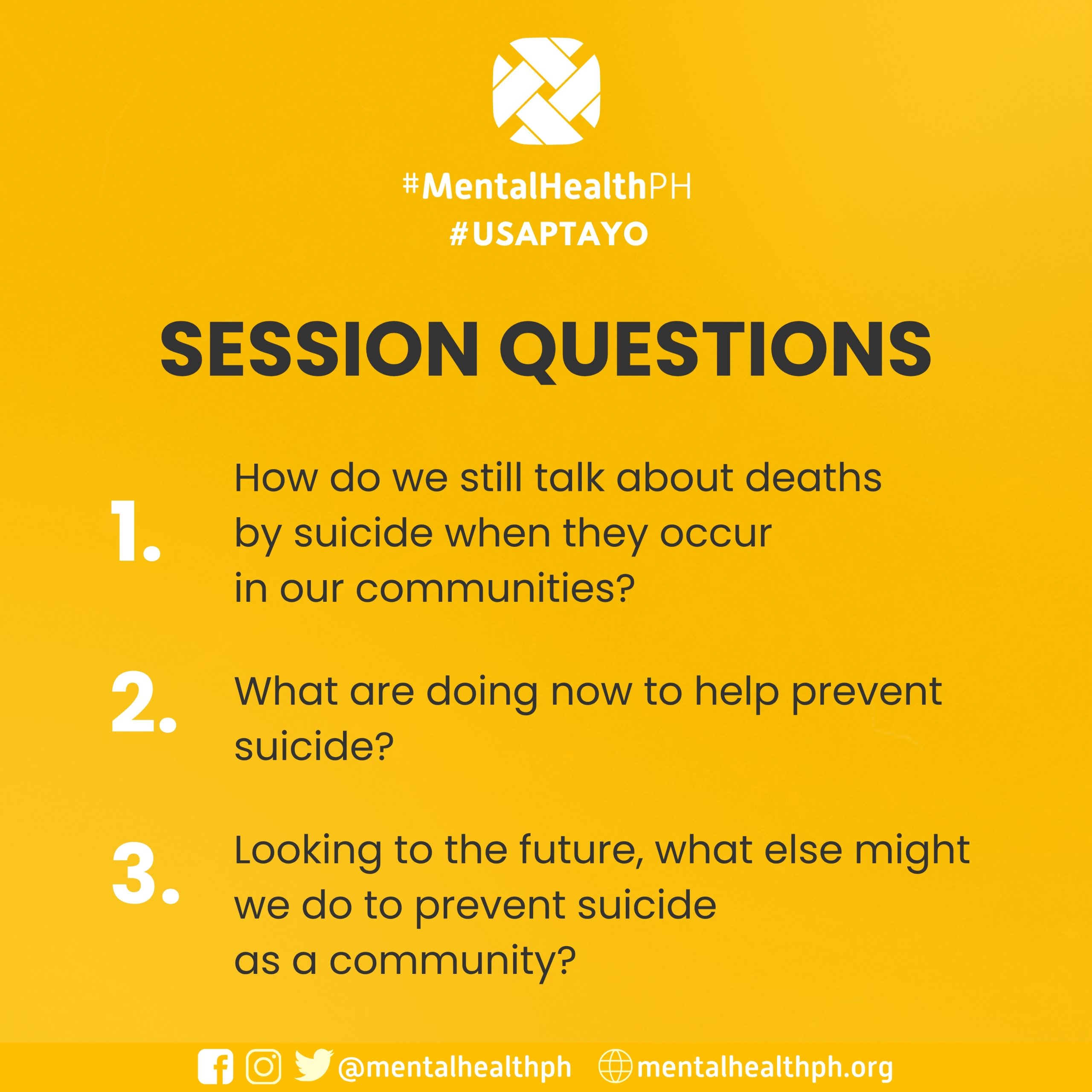
Questions:
- How do we still talk about deaths by suicide when they occur in our communities?
- What are we doing now to help prevent suicide?
- Looking to the future, what else might we do to prevent suicide as a community?
CITED:
[1] Editorial – suicides on the rise. (2026, March 26). Philstar.com. https://www.philstar.com/opinion/2026/03/27/2517090/editorial-suicides-rise
[2] Superable, R. (2026, April 3). Gatchalian seeks strengthened rollout of mental health programs amid rise in suicide cases. The Manila Times. https://www.manilatimes.net/2026/04/04/tmt-newswire/gatchalian-seeks-strengthened-rollout-of-mental-health-programs-amid-rise-in-suicide-cases/2313930
[3] Suicide cases surge in philippine capital amid concerns over online gaming impact. (2026, March 29). The Star Malaysia. Retrieved April 10, 2026, from https://www.thestar.com.my/aseanplus/aseanplus-news/2026/03/29/suicide-cases-surge-in-philippine-capital-amid-concerns-over-online-gaming-impact#goog_rewarded.
[4] Mayo Foundation for Medical Education and Research. (2022, August 5). Suicide grief. Mayo Clinic. https://www.mayoclinic.org/diseases-conditions/complicated-grief/in-depth/suicide/art-20044900?p=1
[5] Centers for Disease Control and Prevention. (2024, April 25). Risk and protective factors for suicide. Centers for Disease Control and Prevention. https://www.cdc.gov/suicide/risk-factors/index.html
[6] How the 5 steps can help someone who is suicidal. #BeThe1To. (2023, November 8). https://bethe1to.com/bethe1to-steps-evidence/
[7] Best Practices and Recommendations for Reporting on Suicide. Reporting on Suicide. (n.d.). https://reportingonsuicide.org/